Feature 03 · Curriculum Graph
Your knowledge mapped as a network, not a flat number.
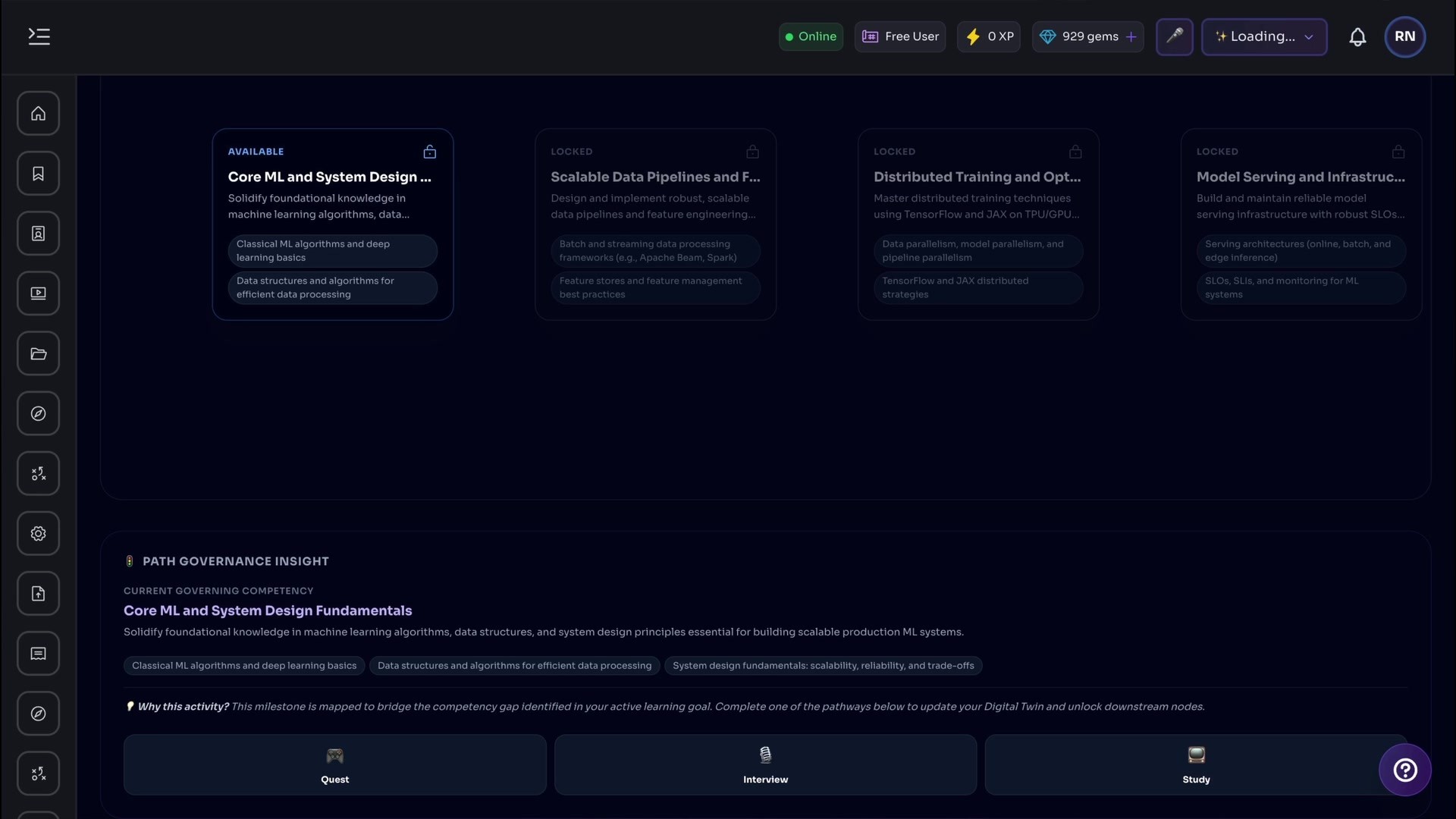
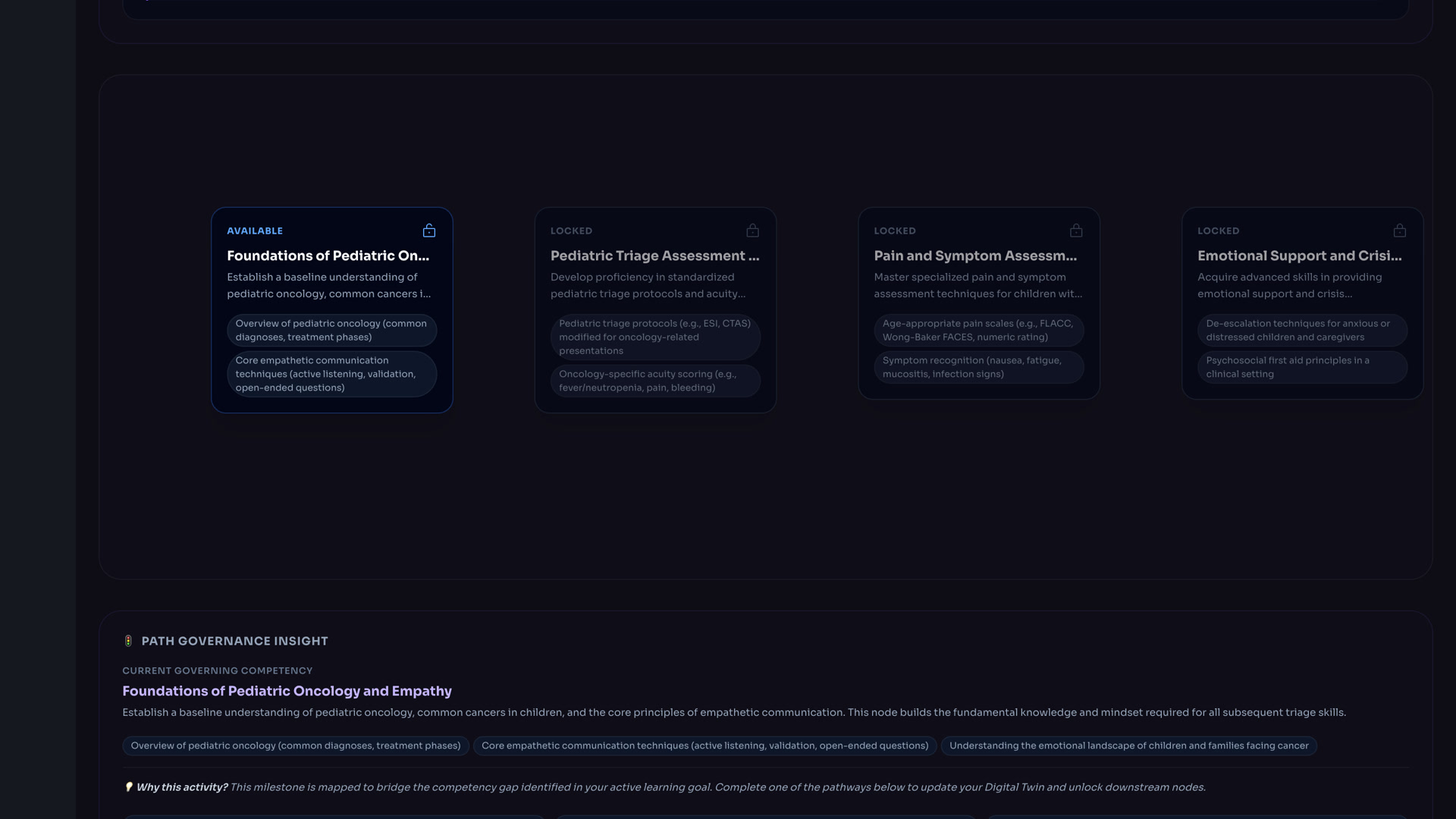
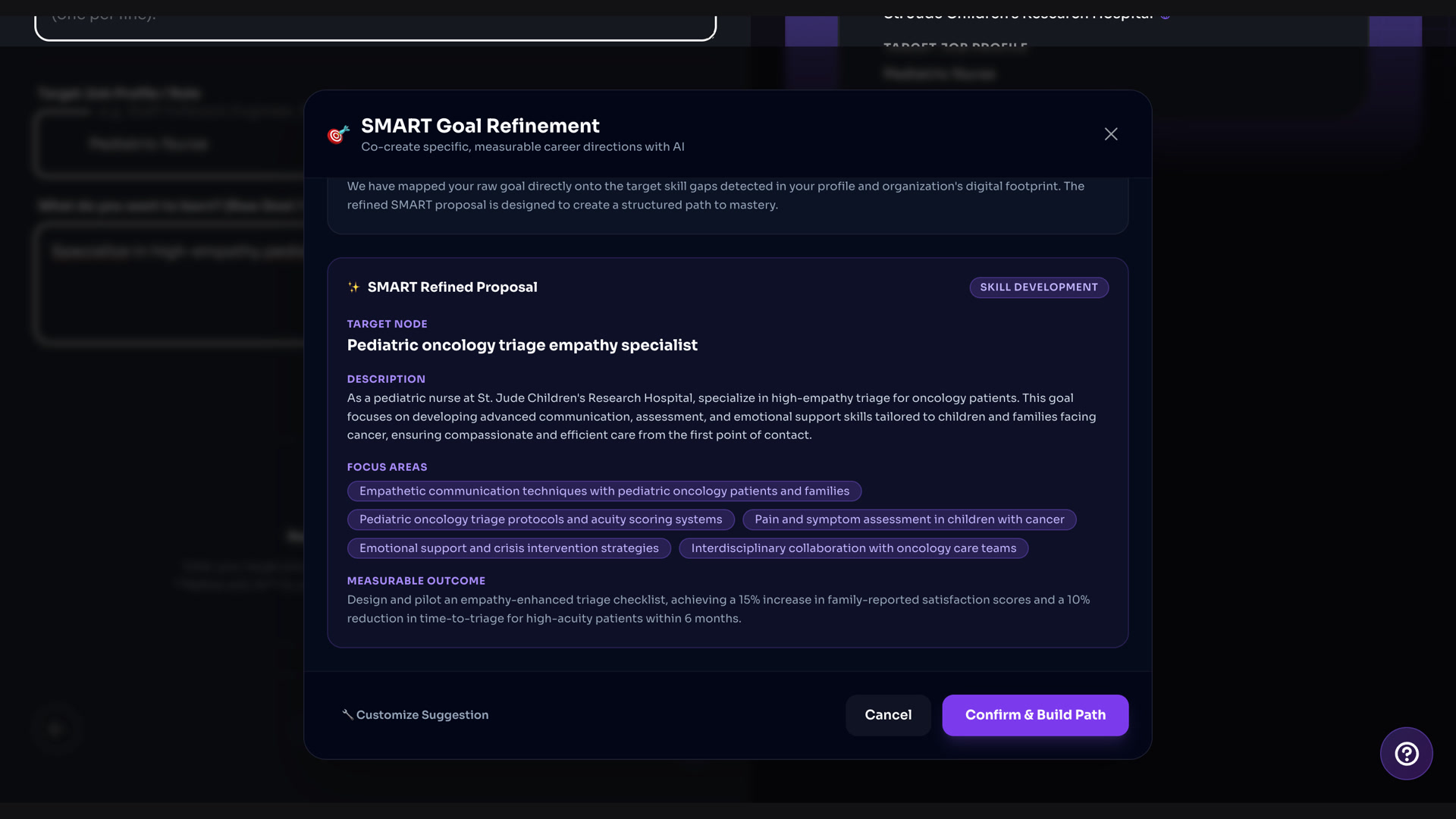
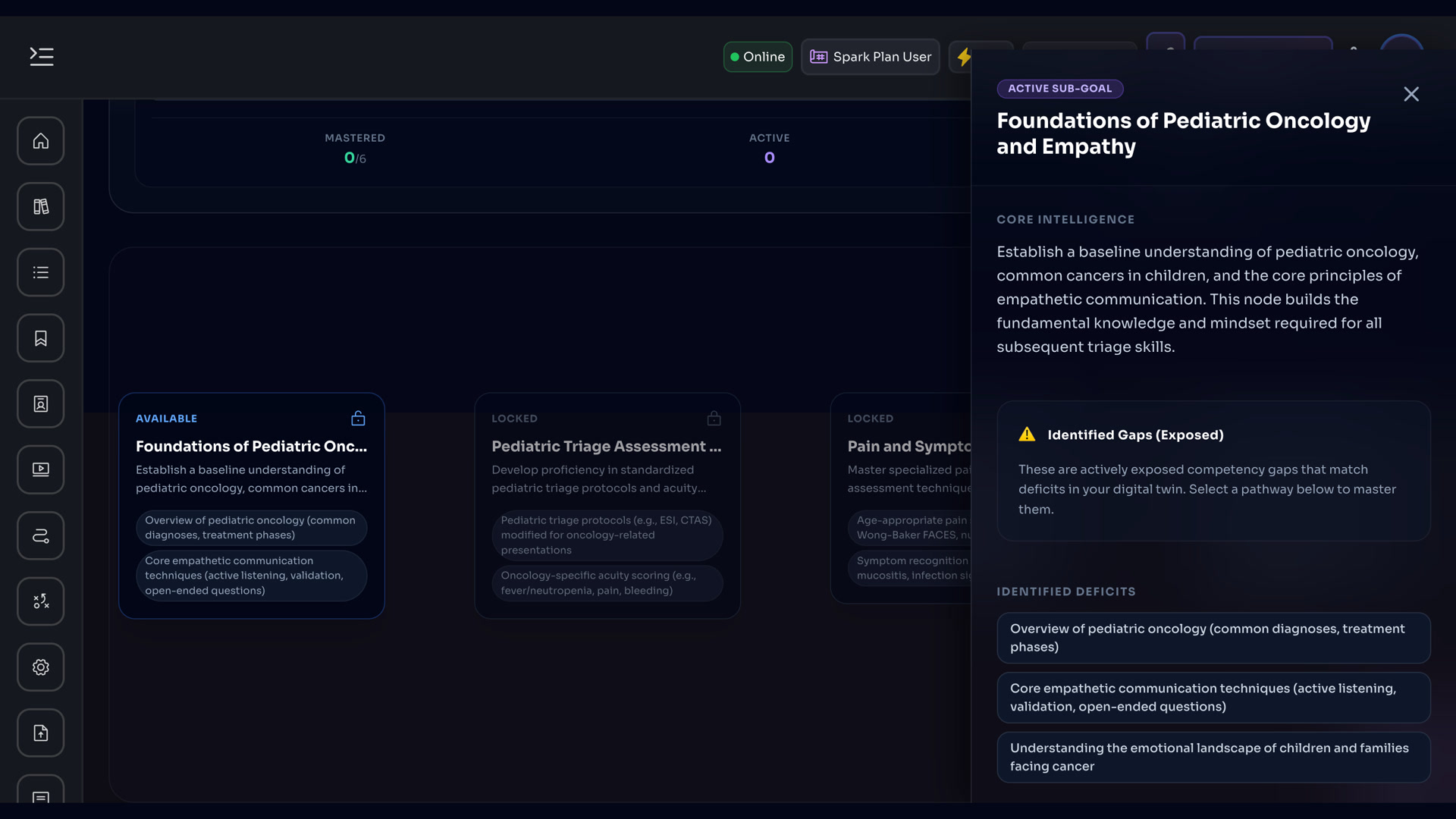
The MIND Graph (Multi-dimensional Integrated Node Dependencies) visualizes your domain mastery as an interconnected web of prerequisites. See not just what you missed, but what that missing piece is blocking downstream.
No account needed · about five minutes
Video Explainer
How to read your Curriculum Graph.
 3:02
The Topology of Mastery
Explore the MIND Graph interface.
The Cognitive Science
Why course percentages lie.
A typical online course gives you a completion bar: "74% Complete". But knowledge is not a liquid that fills a bucket. It is a hierarchical graph.
If you fail to grasp a foundational principle (like cognitive biases in decision making), you might still memorize the slides in module 4, but your entire reasoning structure will buckle the moment a real-world scenario tests module 7.
The MIND Graph treats learning mathematically as a Directed Acyclic Graph (DAG). When you stumble in an interview or study session, ALICE traces back through the prerequisite edges to find the root node that gave way — directing your practice to the true bottleneck rather than treating symptoms.
The research behind this
Built on Principle IV: fix the root, not the symptom. Nothing is marked mastered until it has passed every step of a seven-step chain.
Five minutes. Out loud. See what it finds.
Just your first name. Your first check-in is free, and you’ll leave with something to do tomorrow.
No account needed · about five minutes
- Do I have to talk out loud?
- For the daily check-in, yes: it’s a voice conversation and you don’t type. Interviews can be voice or fast text, and study sessions can be voice or chat.
- Can I do it on my phone?
- Yes. The check-in runs in the browser on your phone, tablet, or computer.
- Do I need an account?
- Not for your first check-in. A free account keeps your conversation and picks up where you left off.
- Is it private?
- The check-in is confidential, and nothing is shared unless you share your footprint link. For exactly what’s stored, read the Privacy Policy.
- What does it cost?
- The first check-in is free, with no account or card, and new accounts get starter gems to try deeper things. ProfilEd Pro is $19 a month for unlimited use. Full details are on the pricing page.